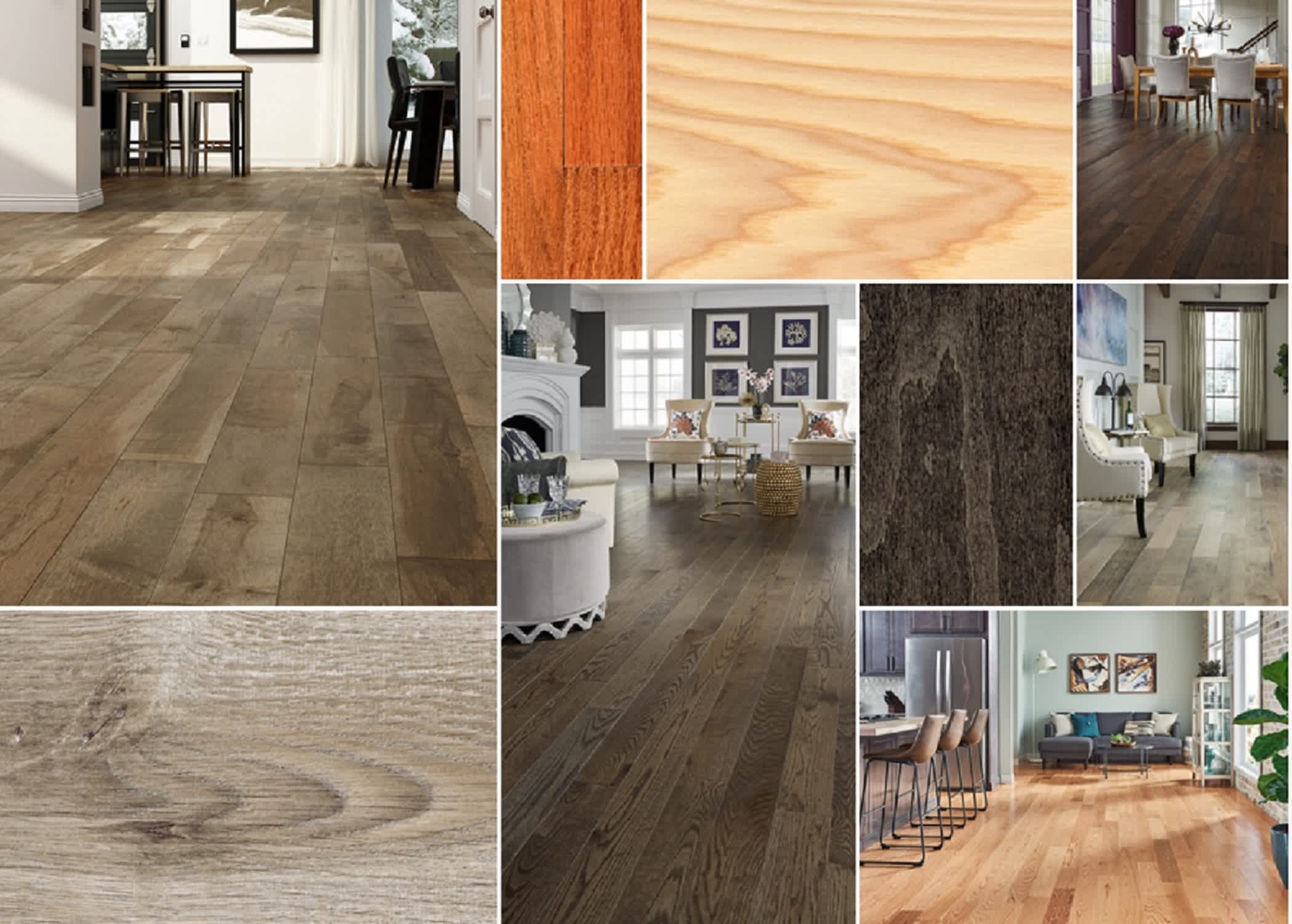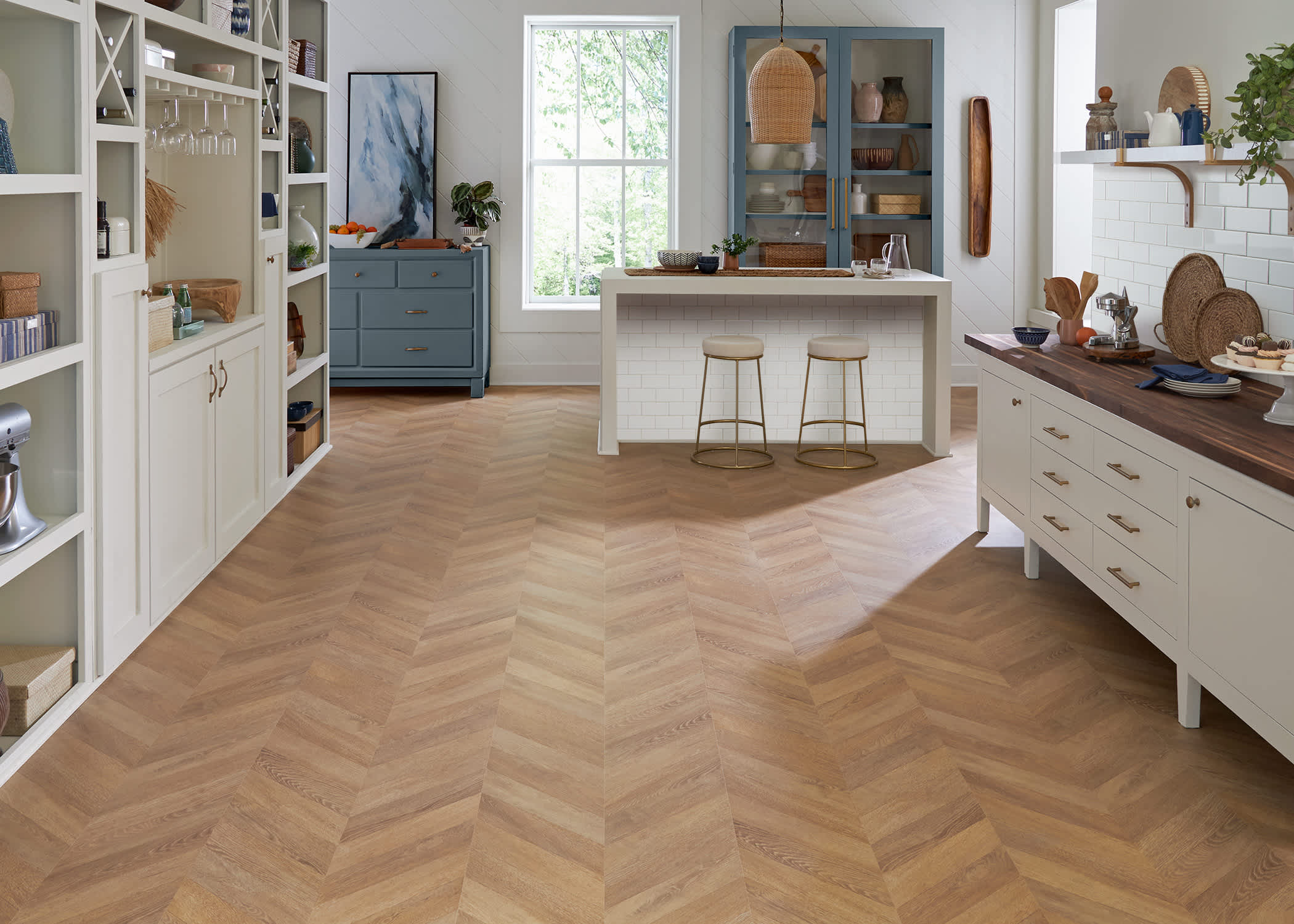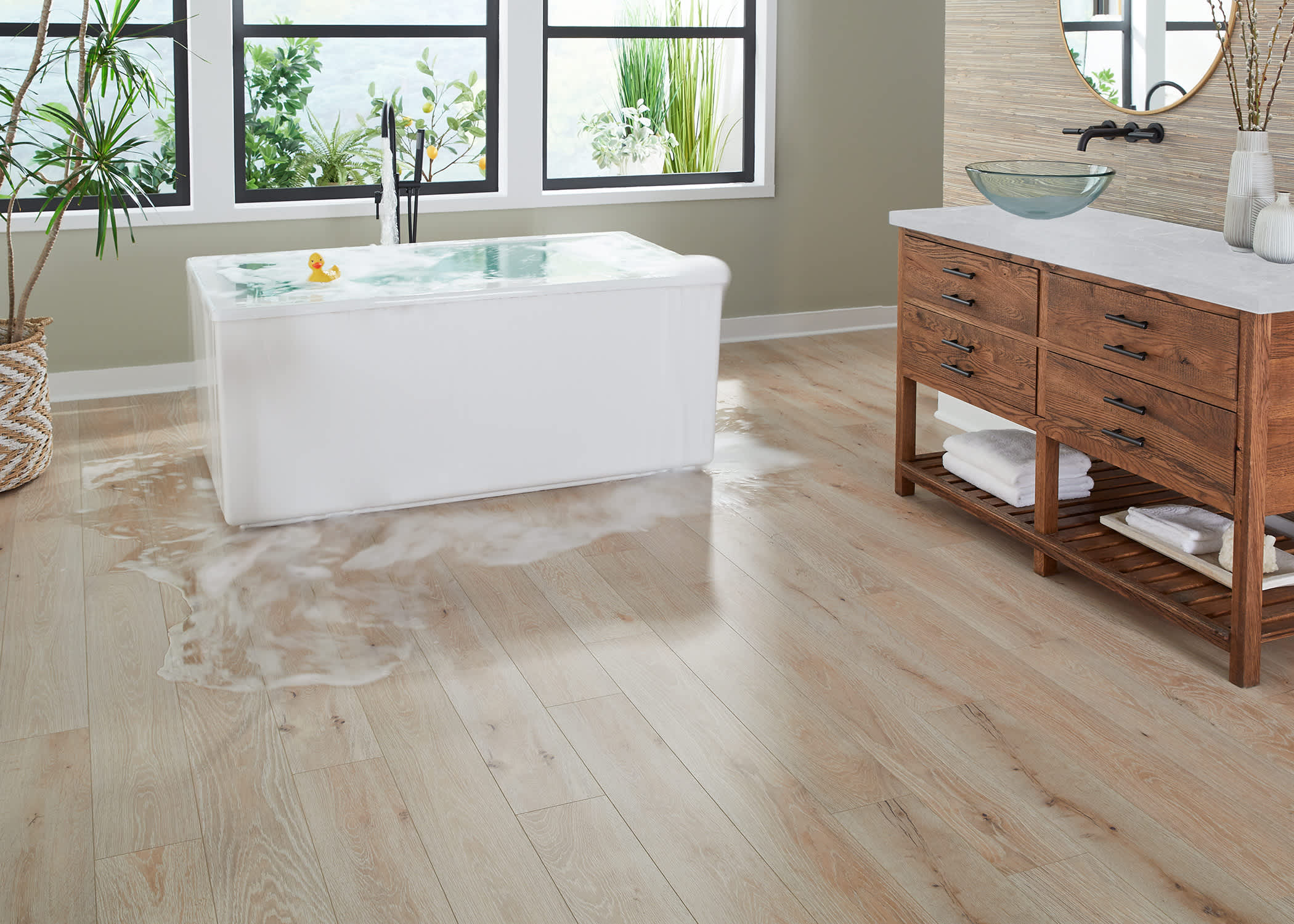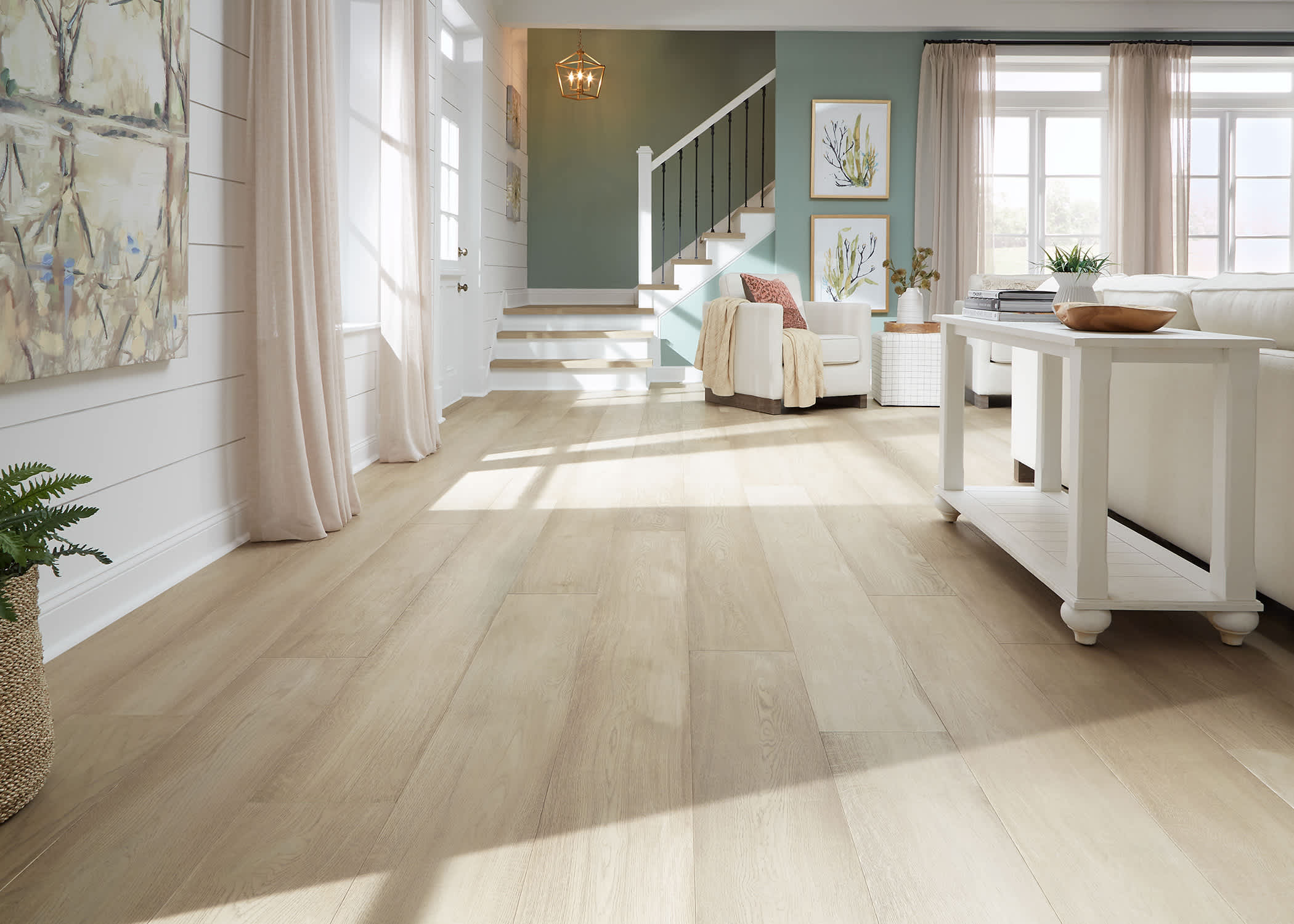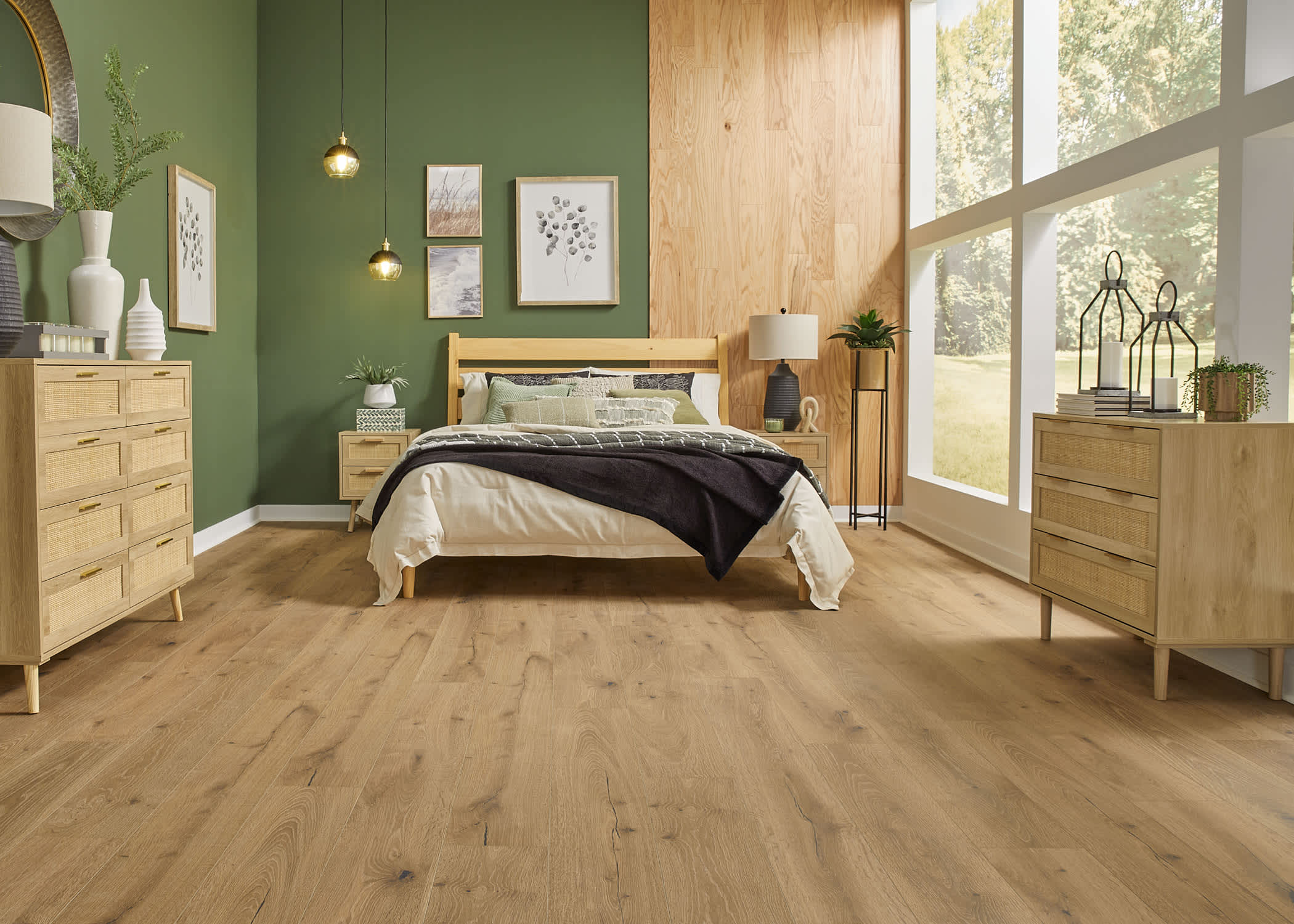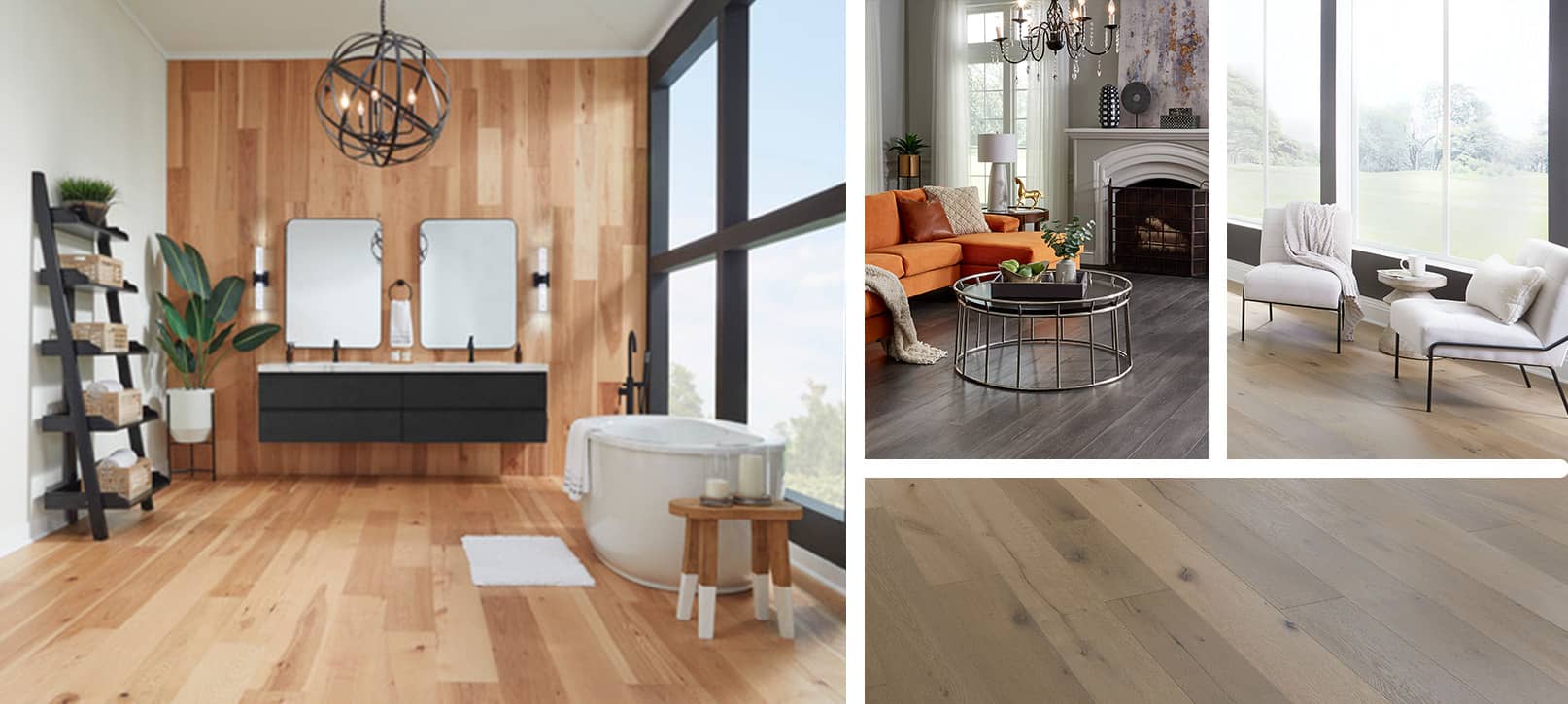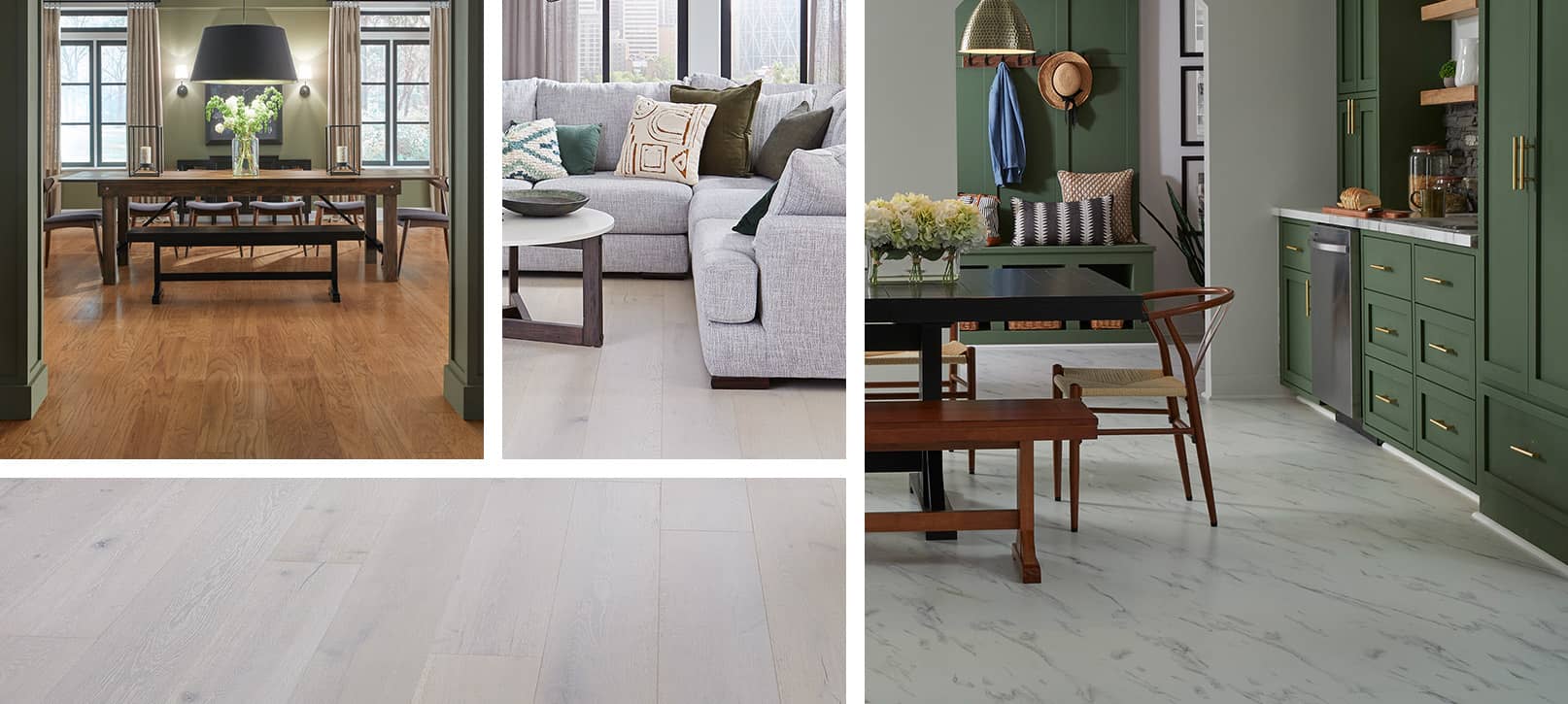
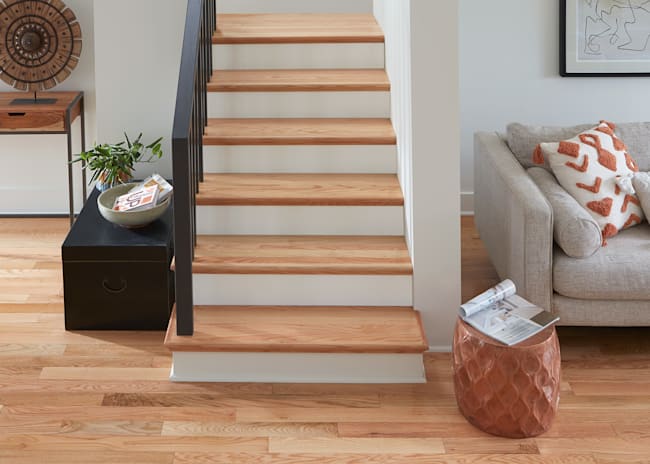


We love seeing how awesome our customer's projects have turned out. We're going to show a few off so everyone can see how amazing they look!
Posted at 09:15 AM in Community Information, Design Ideas, Dream Home, Flooring, Installation, Laminate, Products, Testimonials | Permalink | Comments (0) | TrackBack (0)
Reblog
(0)
| | Digg This
| Save to del.icio.us
|
|
Have we mentioned that you should acclimate? Once, twice, maybe? Well, here are a few recommendations when it comes to acclimating your new floor before you install it.
For best performance, wood flooring should be one of the last items installed. Heating and air conditioning systems should be fully operating and running at least 7 days before the installation. To prevent moisture related issues such as board edge cupping, all wet work involving water or moisture (plumbing, plaster /drywall ceilings or wall finishes, painting, etc.) should be finished with ample time allowed for complete drying prior to wood floor installation. New concrete should be cured and at least 60 to 90 days old.
To prevent moisture build-up, homes with crawl spaces must have vents for proper cross-ventilation. Provide year-round air circulation with multiple vents. Venting allows damp areas to dry-out. Vents must be adequately spaced so that no dead air spaces remain. Under the home in the crawlspace use black 6-mil polyethylene sheet plastic as a moisture barrier. Completely Cover 100% of the surface of the ground to guard against excessive moisture. Overlap plastic seams 6” and duct tape
Store CORK Flooring flat for a minimum of 48 hours, in open packaging, at room temperature (15°- 30°C / 60°-85°F and a maximum of 75% relative humidity) in the room in which they are to be installed.
Store Laminate Flooring flat for a minimum of 48 hours, in unopened packaging, at room temperature (15°- 30°C / 60°-85°F and a maximum of 75% relative humidity) in the room in which they are to be installed. For floors with radiant heating make sure to turn down your thermostat to 15°C / 60°F at least 1 week prior to installation (do not turn off heating if the temperature outside is below freezing). Maintain the temperature below 27°C / 80°F.
Solid Wood Domestic and Exotic Links
All wood products are affected by environmental conditions especially prefinished materials. Acclimate the new flooring in the areas to be installed to normal lived-in conditions while in the boxes. If products are protected in plastic open the ends of the boxes. Length of time is not the determining factor. The goal is to reach an equilibrium or moisture balance between the new flooring with its surroundings before installation. This balance could be achieved in as little as 1 to 5 days, or longer for some exotic species. For best performance, condition the flooring to consistent indoor temperatures of 60°-80° F and indoor humidity levels of 30% - 50%. Very dry or humid regions usually require extended conditioning. Recommended acclimation levels maintained even after the installation will minimize board movement, excessive squeaks and gaps. Proper jobsite conditions, acclimation and moisture testing the subfloor and new flooring and all work together for the success of the installation. This is the responsibility of those overseeing the project.
Posted at 06:34 AM in Flooring, How-To, Installation, Stability | Permalink | Comments (2)
Reblog
(0)
| | Digg This
| Save to del.icio.us
|
|
Approximately 85% of all installation failures are resulting from moisture problems. Therefore, the purpose of this post is to outline typical moisture testing, planning and procedures designed to help your installation be a successful one.
The installation of Lumber Liquidators, Inc.("LLI") wood flooring should not commence until conditions are determined to be "dry" according to industry moisture testing standards. Testing is to include, (a) the new wood flooring, (b) the wood subfloor or cement slab.
It is the responsibility of the professional flooring contractor or the Do-It-Yourselfer (DIY) to inspect and test jobsite moisture conditions prior to the commencement of any flooring system to ensure compliance with established hardwood industry standards. It is understood that moisture testing only establishes the existence of moisture at the time of testing and does not forecast future moisture issues. Installers would not be held responsible for moisture problems arising after the installation providing testing was conducted and normal moisture remediation was completed before installation. The point of moisture testing is to establish when the new flooring and substrate is actually ready for installation or the need to reschedule the work until conditions are acceptable.
Testing concrete
Common testing methods for moisture
THE CALCIUM CHLORIDE TEST
THE POLYFILM TEST
THE PHENOLPHTHALEIN TEST
Testing new wood flooring and subfloors
Moisture Meters: probe and pinless
Testing concrete
LLI does not recommend installation of any flooring system over a newly-installed concrete slab within 60 days of pour. Concrete slab drying time is affected by the type of construction, concrete formulation, location of the building and climatic/environmental conditions. Vapor barriers or under-slab membranes, while recommended, can increase slab-drying times, therefore accurate testing should not commence until after some 90 days of cure time. When conducting slab moisture testing, conduct tests in several areas regardless of the age of the slab. If the test(s) indicate a wet slab, document the results and delay installation of the flooring until corrected.
The use of an electronic concrete moisture meter to determine slab moisture emission is not reliable nor recommended. This is because electronic meters measure moisture content in the slab, usually in terms of an overall percentage and register moisture content only at 1% of the surface, while other meters register an average only in a vertical downward direction where placed. Metered moisture content values may indicate degree of saturation of a slab, but not the on-going emission rate that is occurring at the time.
The Following are several industry-recognized concrete slab moisture tests that provide quantitative measurements of moisture emission. All tests should be conducted at several different locations in a room--typically along exterior walls and walls with plumbing enclosures.
Common testing methods for moisture
THE CALCIUM CHLORIDE TEST: The calcium chloride test is one of the oldest and most legally recognized concrete moisture tests. This test has been used most often by flooring retailers and contractors. The cost can run about $50 or $60 per test. Depending on the kit purchased results can be acquired immediately, or sent away for documentation and reading. The calcium chloride test works by measuring changes in weight of anhydrous calcium chloride crystals.
Typical procedure: a small plastic dish of anhydrous calcium crystals is weighed to determine moisture content. 1st, after sanding or scarifying the cement surface (fig 1) the entire dish is weighed on a gram scale prior to placement and the weight, date and time the test was started must be recorded. The lid is then opened, and the dish of crystals is carefully set down on the concrete for 60 to 72 hours. The dish is enclosed within a 7-by-10-inch cover, which is then sealed with plastic tape to the concrete (fig 2). During this time, the only source of moisture being absorbed by the anhydrous crystals is what can evaporate out of the covered concrete surface area. A note of caution: Use care in lid dealing and removal of the dish, and weighing as exposure to atmosphere will dramatically effect the results.
At the end of the test, the dome is removed and the lid is placed back on the dish and sealed. Again the dish is weighed on the gram scale and the date and time are marked. The change in weight is multiplied by a constant and divided by hours to provide an estimated rate of evaporation, in pounds.
For example, water weighs 8.3 pounds per gallon. Pounds, is the equivalent weight of water that evaporates out of a 1,000-square foot surface area during 24 hours. If the test reports 8.3 pounds emission, then one-gallon of water is leaving a 1,000 square foot surface area in 24 hours. A conservative but generally recommended allowable amount of moisture emission as expressed by the calcium chloride test is 3.0 pounds per 1,000 square feet per 24 hours at the time of the installation of the flooring.
THE POLYFILM TEST: Several pieces of plastic film, 18”- 24” squares of are placed at key points on the cement, seal all four sides with silver duct tape. After 24 hours, the plastic film is removed and inspected for signs of condensation. If beads of water are found on the subfloor or the concrete appears darker this is a heads-up that further testing is necessary. If there is no indication of moisture under the plastic film, one can assume the installation may proceed. The reading is valid at 24 hours, but it's even better if the test can stay in place until 72 hours have passed. The plastic film test can also be "accelerated" by using a heat source such as a 40 to 60 watt light bulb safely placed 18” above the plastic.
PHENOLPHTHALEIN TEST: This moisture test uses a 3 percent phenolphthalein solution (fig1) in water-free ethyl alcohol. Dime sized holes,1/4-inch deep, are drilled in various areas of the slab, particularly around walls. Then two drops of the solution are applied into each of the drilled areas. If there's no color change in the solution, there should not be enough moisture and the alkalinity is not high enough to affect the installation. But if the phenolphthalein turns pink or dark red within five minutes and the pH is 9.0 or higher, further testing must be done with a more precise method. This should NOT be the only method used for testing moisture. Color of concrete surfaces: The "proper" color of concrete should be a light yellowish-grey (similar to limestone) not sugar white. In fact, a sugar-white surface usually means the concrete was improperly cured and can create a severe moisture problem later on (usually months later). This is due to the poor hydration of cement within the surface, creating a disproportionately high water to cement ratio...that appears white.
(fig1)
(fig2)
pH paper or litmus paper test:
Both the phenolphthalein and litmus paper tests measure the alkalinity of the surface of the concrete. Determining if cement is alkali free is important for glue down installations on concrete. Excess alkalinity(salts) can contribute to adhesive failure. Alkali can be visible as a white powder on the surface of the concrete. However, it is the excess salt contained within the concrete that can cause adhesive failure over time. This problem is magnified if moisture is present and passing through the concrete, as this condition will deposit the excess salt on the concrete surface. A simple pH test (fig2) will determine the presence of alkali on a slab surface. Apply a few drops of distilled water to a small thoroughly clean and scraped concrete surface area and apply a strip of pH paper to the wetted area. The paper will change color within 5 minutes. Compare the color change to the chart standard supplied with the paper to indicate the pH of degree of alkalinity. A pH range from 5 to 10 is acceptable. Corrective measures must be taken with any concrete slab that measures a pH reading above10.
Testing new wood flooring and subfloors
Moisture Meters: probe and pinless Probe or pin-type meters (fig1) are fast and easy to use. They come with different measurement indicators. The lower-cost units have L.E.D. display lights indicating different moisture levels; the better-quality units have analog or digital displays and provision for different species and wood temperatures.
The pinless meters (fig2) are also referred to as "non-destructive" because these don't leave small testing holes in the wood. Signal penetration for pinless meters is up to 1 inch for both hardwood and softwood. The meter can be moved across the surface to identify pockets of moisture in a wood block or plank. It is relatively unaffected by temperature. Rough surfaces have very little effect on the reading. Measurements can also be taken through coating, varnish or paint without damage to the surface.
One advantage of probe type meters is that those with insulated pins can measure moisture content at varying depths--you can tell whether the moisture content near the bottom of a board is higher than near the top.
Deciding which kind of moisture meter to buy is a matter of sorting through the features you think you will need, and how often you may use it, and then understanding the various features and benefits. It is important that the meter you choose offers the following:
• A clear analog or digital dial.
• A moisture content range from at least 6 percent to 30 percent.
• The necessary adjustment tables for various species; (some meters have a built in adjustment for this function)
Testing Wood Subfloors: Wood subfloors are actually easy to check for moisture content. Just test for moisture at several locations in the room and average the results (fig1). In most regions of the country, a "dry" wood subfloor that is ready to work has a moisture content of 12 percent or less, or down to about 7% in states with low (RH) relative humidity. If excessively high readings are obtained, installation should not proceed until the origin of the moisture is identified and moisture problems are remedied. During the winter, an overly moist subfloor can be dried out by running the heat for a few weeks. Air conditioning during the summer will do the same thing.
Before installation, the moisture content of the subfloor should be within 4% percentage points of the new flooring (fig2). If the moisture content between the new flooring and subflooring varies more than 4 percentage points or 2% for boards wider than 2 1/2” the flooring should not be installed.
fig1)
Please direct inquiries to Lumber Liquidators Technical Department at 800-366-4204
Posted at 07:38 AM in Flooring, Hardwood, How-To, Installation, Products, Safety, Terms, Tools | Permalink | Comments (0)
Reblog
(0)
| | Digg This
| Save to del.icio.us
|
|
Not entirely sure what is best for you? What tools will you need? Use this handy job site checklist before you get started to figure out some of those pesky questions you may not know the answer to. It will be useful for your installer or your local Lumber Liquidators store even if you plan on installing yourself!
Posted at 09:40 AM in Flooring, How-To, Installation, Measuring, NWFA, Terms, Tools | Permalink | Comments (1)
Reblog
(0)
| | Digg This
| Save to del.icio.us
|
|
Want to see what actual customers are saying about their fooring?
Then check this video out and find out why Terri is a fan of her Bellawood Brazilian Koa.
Posted at 09:15 AM in Flooring, Products, Testimonials | Permalink | Comments (1)
Reblog
(0)
| | Digg This
| Save to del.icio.us
|
|
We want to make sure you understand some myths about Engineered hardwood and the facts behind it. Here's an article to help you understand the truth about Engineered flooring.
Myth #1 - Engineered flooring is “fake.”
Fact #1 - Engineered Flooring is real wood! Engineered flooring sold at Lumber Liquidators consists of a decorative hardwood veneer atop plies of premium quality, hardwood plywood. Even an HDF core is real wood that has been compacted into a dense, impact-resistant format.
Myth #2 - Engineered flooring is cheap and won’t last.
Fact #2 - Engineered flooring can be economical, but durability is not compromised. Multi-ply hardwood or high-quality HDF cores provide structural stability and all Schon, Bellawood and Virginia Mill Works engineered products have premium quality finish to protect the hardwood veneer and resist normal wear and tear. Warranties of 30 or 50 years show that this flooring is built to last.
Myth #3 - Engineered flooring looks bad & my neighbors will know I didn’t buy solid wood.
Fact #3 - Most engineered flooring at Lumber Liquidators is made in Random Length format to avoid a repetitive appearance. Thanks to REAL HARDWOOD veneers, once the flooring is installed, you cannot tell the difference between solid and engineered planks. Also, because more planks can be derived from every tree, Engineered flooring can be more cost effective, which gives customers access to beautiful exotic species they may not think they can afford.
Myth #4 - Engineered flooring can’t be refinished.
Fact #4 - Engineered flooring with veneers of 2mm thickness or more can be refinished at least once. Veneers of 0.6mm cannot be refinished, but flooring can usually be professionally buffed or polished to remove surface scratches and renew luster. In reality, today’s customer does not stay in a home as long as they used to and most people will never have to redo their floors. With premium quality finish that contains scratch and abrasion resistant agents, Schon or Bellawood Engineered flooring will still be going strong, long after the customer has left the home. (Note: Virginia Mill Works hand scraped products are not recommended for refinishing.)
Myth #5 - Engineered flooring is more complicated to install.
Fact #5 - With proper milling, Engineered flooring is no more difficult to install than Solid Hardwood flooring. In fact, Engineered flooring is very popular with DIY customers and convenient Quick Clic options provide fast, easy flooring solutions for every budget.
Myth #6 - Engineered flooring is only good for basements and condos.
Fact #6 - Engineered flooring IS a great option for below grade applications, but it can also be installed in virtually any room of a home or building. By design, the plies of Engineered flooring work together to offset the natural movement of real wood. Therefore, Engineered hardwood flooring remains flat and delivers enhanced stability during normal seasonal and environmental changes that occur in every home, and can be more reliable in humid climates. Engineered flooring can be nailed, glued, or floated and can be installed above or below grade, on concrete and over radiant heat applications.* (Most Species)
Myth #7 - Size matters! When it comes to veneers, thicker is better.
Fact #7 - Not always. Plank stability can vary greatly depending upon veneer, species, construction design, and climate.
Some species are inherently prone to checking or cracking if the veneer is too thick. Exotic species can be especially problematic if oils in the veneer react with the adhesives required to bond the wood plies. Thinner veneers yield less oil and can thus be more effective for the long-term performance of the flooring.
Construction is another critical component of Engineered flooring performance. Because one layer balances the next, the design can make or break the plank. If the core is not properly balanced with the veneer, the stronger layer will eventually prevail and cause the layers to strain, flex and bend.
Climate also has an impact on long-term durability. In very arid climates, for example, thinner veneers can remain beautiful for years whereas thick veneers react negatively to the lack of moisture by cupping or cracking.
In reality, Engineered flooring is a science. Lumber Liquidators needs to fully understand your needs in order to make the right suggestion. Thicker is NOT always better, but Lumber Liquidators will have a solution for every situation because care is taken in understanding every client’s environment.
Myth #8 - “I just saw the same thing at Woody’s World of Wood for $2 less!”
Fact #8 - Probably not. When evaluating pricing, the following should be considered:
•Veneer Thickness
•Plank Length & Style: How long are the planks? Are they Random Length or Fixed Length? Are the planks truly a single piece as the specs claim, or are listed dimensions achieved by joining two or more narrow/short pieces of wood?
•Wood Grade: Is the veneer clean or are there large knots, putty repairs, cracks, etc.?
•Finish: Is it clear or milky? Can it be easily scratched with a finger nail or blunt object?
•Species: Is it really Ebony, or a clever name that is meant to confuse, like Ebony Ash?
•Warranty: Finish? Structure? 5, 25 or 50 years?
Posted at 09:03 AM in Engineered, Flooring, Products, Stability | Permalink | Comments (1)
Reblog
(0)
| | Digg This
| Save to del.icio.us
|
|
I asked our wonderful Tech & Install department to give me some of their top safety tips when installing a floor. Safety should be one of your main concerns when installing. No one wants a trip to the Emergency Room for something that could have been avoided.
1.) Make sure you use a mask when cutting the wood.
2.) Always cut outside, it is helpful to have a small fan blowing the dust away from the house. Not only is this safe for you, it keeps your house a little cleaner too.
3.) Make sure power cords are fully intact.
4.) Use sharp blades when cutting the flooring to prevent wood from binding to the saw (and if you don't know what type of blade to use, check out our article on choosing a saw blade).
5.)Make sure the saws have protective shields.
6.) Ear plugs should be worn to help with loud noises.
7.) Knee pads should be worn to protect knees on hard floor surfaces.
8.) Eye glasses should be worn.
9.) Gloves can be helpful to prevent splinters.
10.) Extension cords should be moved away from the walking and cutting areas.
11.) Keep fingers away from saw blades. Avoid cutting small pieces of wood when possible.
12.) When using a skill saw, always cut away from your body.
13.) Make sure saws are cut off when not in use.
14.) Bend knees when picking up boxes of flooring. Have friends help you move heavier objects. (no one wants to have back problems)
15.) When ripping out old flooring, use masks, gloves, and glasses. Keep area clean to avoid stepping on nails. (You never know what you'll find under there)
16.) Wear steel toed shoes.
Also, before you start a project and have safety concerns, check with our Tech & Install department by contacting them at install@lumberliquidators.com.
Posted at 09:00 AM in Flooring, How-To, Installation, Safety | Permalink | Comments (0)
Reblog
(0)
| | Digg This
| Save to del.icio.us
|
|
Posted at 09:05 PM in Flooring, Handscraped, Laminate, Products | Permalink | Comments (0)
Reblog
(0)
| | Digg This
| Save to del.icio.us
|
|
This winter has been cold. And snowy. And around here, a bit icy also. With all of that bad weather, there comes ways to make it a little more tolerable like snow shovels, plows, and ice melt.
As useful as ice melt is outside, it can cause a little havoc on the inside of our homes, especially if you have hardwood floors. After scouring the internet, I've found that many people don't know how to get rid of the milky residue that ice melt leaves on their floors. And since I have a whole bunch of expertise sitting around me, I decided to ask our Tech & Install team what they would do to get rid of the residue that snow, ice, and ice melt leave on the floor.
Their best advice is to buff the area in a circular motion with warm water on a lightly damp cloth. Buff the area with the damp cloth and then buff again with a dry cloth. This may take several tries, but it should remove the milky residue.
If the first method doesn't do the tricky, you can try adding one cup of white vinegar diluted in one gallon of warm water. Again, use a lightly damp cloth and buff the area in a circular motion and buff dry immediately. Always test this method in a small spot first.
Once the milky residue is off, you should protect the floor with mats inside and outside the main entrance to prevent any ice melt from getting on the floor again.
Posted at 09:15 AM in Cleaning, Flooring, How-To | Permalink | Comments (1)
Reblog
(0)
| | Digg This
| Save to del.icio.us
|
|
Hey everyone, sorry that we've been on a blogging break. With the holidays, a wedding, and a honeymoon, i haven't been able to give you great information for a couple weeks.
Well, we're back and we have a great video today. John Jakob is here to tell you about the three categories of laminate that we offer: Value, Better, and Best.
Take a look to learn more information about the different types of laminate that we have for you.
If you want to know which brands fall in which categories, we have it broken down below so it's easier to determine which brands you'll want to look at.
Utopia - 6 mm, Multi-strip, 10 Year Warranty
Charisma - 7mm, Multi-strip, 20 Year Warrany
Charisma Plus - 8mm, Single Strip, 20 Year Warranty
Nirvana - 8mm, Multi-strip, Pre-attached underlayment, 25 Year Warranty
Nirvana V3 - 8mm, Single-strip, Pre-attached underlayment, 25 Year Warranty
Nirvana Plus - 10mm, Single-strip, Pre-attached underlayment, 25 Year Warranty
Ispiri - 12mm, Single-strip, Pre-attached underlayment. 30 Year Warranty
Kensington Manor - 12mm, Single-strip, Pre-attached underlayment. 30 Year Warranty
St. James Collection - 12mm, Single-strip, Pre-attached underlayment. 30 Year Warranty
Posted at 09:24 AM in Design Ideas, Dream Home, Flooring, Laminate, Products, Terms | Permalink | Comments (0) | TrackBack (0)
Reblog
(0)
| | Digg This
| Save to del.icio.us
|
|